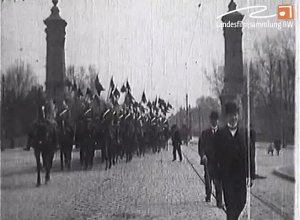
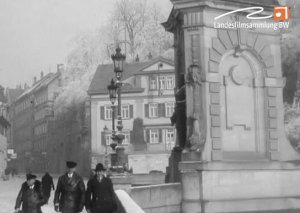
An escort of the second royal dragoon-regiment of Baden-Württemberg No.26 riding over a bridge.
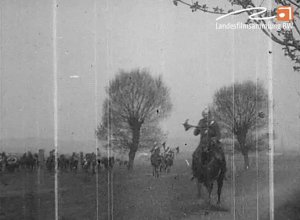
Dragoons of the dragoon-regiment "König" No. 26 (the second royal regiment of Baden-Württemberg) practising offense with lances on horsebacks.
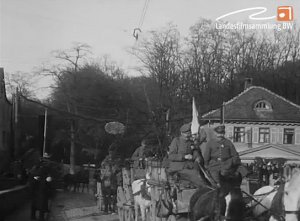
Parade of the Medical Service Corps of the army of Baden-Württemberg in Ludwigsburg. Motorcade in front of the building.
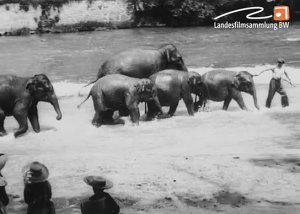
Images of Tübingen: images of the 30th Liederfest of a Swabian choral society in Tübingen. Another pageant on 30 July 1910. Elephants of Circus Charles bathing in the river Neckar. Another pageant. ...
Boat trips on the river Neckar; bathers. Promotional event of the department of Baden-Württemberg of the German Swimming Association on 6 July 1913 with synchronized swimming and water-polo to suppor...
The black-and-white footage by Dresden ENT physician Gerhard Schneider shows landmarks in downtown Dresden, including the Catholic Court Church, the Semper Opera House, the Church of Our Lady and part...
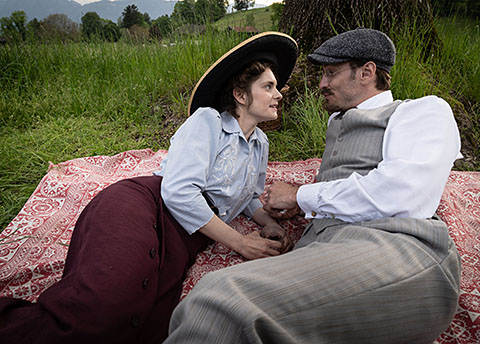
Die Malerin Gabriele Münter und der russische Künstler Wassily Kandinsky leben und arbeiten zu Beginn des 20. Jahrhunderts im bayerischen Murnau am Staffelsee. Ihre Liebe zur Kunst und füreinander ...
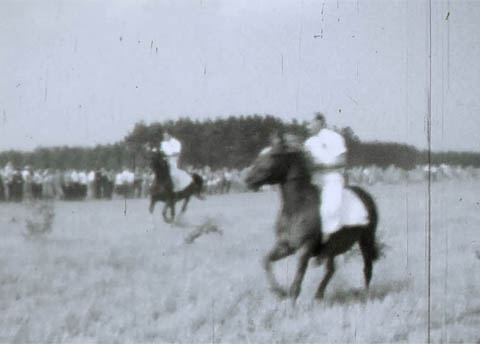
Film documentation of the "Stollenreiten" (Upper Sorbian: jěchanje wo wosušk, Lower Sorbian: rejtowanje wó kołac) in Neu Zauche. The custom originally belongs to the harvest customs in Lower Lusat...
Amanda Reiter in "Life is not a Competition, but I'm winning" (2023)
Szene mit Herbert Fux (vorne)
Szene mit Bernd Herzsprung (links), Herbert Fux (stehend)
Szene mit Ernst Ronnecker (Mitte), Herbert Fux (rechts)
Marthe Keller
Bernd Herzsprung, Chantal Cachin
Herbert Fux (rechts) bei den Dreharbeiten
There was not any kind of restriction.
The production company "Messter-Ostermayer-Film G.m.b.H., Berlin" applied against the ban (for young people) of the film "Reiter der Nacht" at the censorship headquarter in Berlin. The application was...
The film "Reiter der Nacht" was permitted by the censorship office in Berlin with age restriction (only for adults 18 years of age or older) and cuts (three scenes were banned).
The film was permitted to young people under 16 years.
There was not any kind of restriction.
Večerník Práva lidu,
The film title was changed in "Die Reiter von Deutsch-Ostafrika" on 27.11.1934. The was permitted to young people under 16 years.