Spectators watch as engineers complete the fitting of the tank's tracks for its rough ground tests. It drives up and down slopes, over frozen puddles, and across railway lines. Then, with the tracks a...
Over the rough ground of the foothills the British drive their tanks, the Light Tank Mark IIB. In close-up, the turret of one tank opens and the commander (wearing a special tanker's helmet) emerges t...
A line of Vickers Medium Mark I tanks, almost wheel-to-wheel, "greatly improved and much speedier than those in the Great War". A Dragon tows an 18-pounder Mark IV field gun along a road. At a field b...
The headmaster accompanies the two officers (Dimmer is described, incorrectly, as a captain) as they inspect the cadets in the school grounds. The cadets then march past.
Newsreel item on Brigadi...
The camp is tented and quite primitive, near some woods. The soldiers wander about, none badly injured. Some nurses are visible.
Newsreel item on a British convalescent camp in France or Belgium,...
The Mayor and town council assemble outside the Town Hall and deliver speeches on the presentation of the ambulances. A local clergyman gives a prayer. The ambulances then drive past the watching sold...
The hearses, with an escort of sailors, enter the cemetery. One coffin, draped with a Union Jack, is taken from its hearse to its burial plot. An Army burial party fires shots over the grave. One woma...
Opening panning shot across aircraft hangars, with the front of the Giant protruding from one of them. Various shots in increasing close-up of the front of the aircraft: a man inside the cockpit can b...
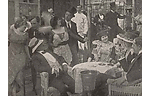
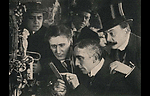
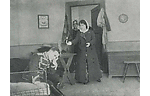
Still from "Die Strafgefangene Nr. 63. Unschuldig verurteilt"
Still from "Der unsichtbare Zeuge"
Still from "Was Liebe vermag"
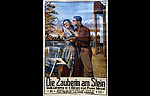
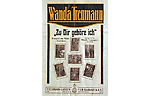
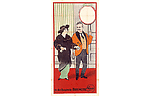
Film poster
Film poster
Film poster
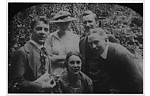
Erich Ponto (on the left), Hedda Lembach, Alice Verden, Wolfgang Filzinger (front, on the right)
Alice Verden
Spectator. "Der heutige Stand der Kinoreform." Bild & Film. Zeitschrift für Lichtbilderei und Kinematographie III, 3/4 (1913/ 1914): 49-56. Der Autor warnt vor den Gefahren, die vom Kino ausgingen un...
Häfker, Hermann. "Sind die 'kleinen' Kinotheater der Reform schädlich?" Bild & Film. Zeitschrift für Lichtbilderei und Kinematographie III, 3/4 (1913/1914): 58-60. Häfker geht davon aus, dass die ...
Schumacher, Carl. "Zur 'Kinodramatik'." Bild & Film. Zeitschrift für Lichtbilderei und Kinematographie III, 3/4 (1913/1914): 63-64. Schumacher stellt die Abwesenheit von Dialogen als das Hauptproblem...
O. Verf.. "Kino-Kritik." Bild & Film. Zeitschrift für Lichtbilderei und Kinematographie III, 3/4 (1913/1914): 68-69. Obwohl immer wieder Forderungen nach der Hebung des Niveaus im Kino laut würden, ...
O. Verf.. "Das Kinoplakat." Bild & Film. Zeitschrift für Lichtbilderei und Kinematographie III, 3/4 (1913/1914): 70. Meldung über die zunehmende Hebung des Niveaus von Kinoplakaten. Statt auf grelle...
O. Verf.. "Die Kinematographie auf dem 85. Naturforschertag in Wien." Bild & Film. Zeitschrift für Lichtbilderei und Kinematographie III, 3/4 (1913/1914): 70-71. Meldung über den Einsatz von Filmen ...
O. Verf.. „Polizeiverordnung für das Rheinland.“ Bild & Film. Zeitschrift für Lichtbilderei und Kinematographie III, 3/4 (1913/1914): 72-73. Meldung über den Einsatz von Filmen als illustrieren...
O. Verf.. „Ein Kinematographengesetz in Württemberg.“ Bild & Film. Zeitschrift für Lichtbilderei und Kinematographie, III, 3/4 (1913/1914): 73. Jeder Film, der öffentlich vorgeführt werde, mü...