General scenes of destruction with British troops in the middle distance, showing mainly the damage done to the church, inside and out, and a water-filled crater.
Damage done to the village of Ri...
I. A Machine Gun Section of seven men with one Lewis gun walking in line across an open field comes to a ridge, and the men form for action. Four men go forward to set up the machine gun (a gunner, a ...
The camp is mainly of wooden huts with a few permanent buildings, for German NCOs and other ranks. Roll-call is taken early in the morning by the Germans themselves. Most are wearing patched uniforms ...
I. (Reel 1) The Western Front 1916, re-edited sections of IWM 116 BATTLE OF THE ANCRE, using the same scenes and captions as the original, but not in the same order. This covers events in the middle p...
A schoolmaster drives a tram as a part-time job. Other men board lorries taking them to work part-time on farms on Sundays. They are "of all classes, from lawyers to navvies". People without local all...
The film stresses the need for part-time work to win the war. A schoolmaster drives a tram. Ladies make bandages, limb supports and other hospital items. Carpenters make crutches. Elderly part-time wo...
Several shots of pigs feeding from troughs (some but not all of these shots are used in IWM 447B). Various shots of people making bandages, artificial limbs and crutches (most material used in IWM 447...
The funeral of a nurse killed when one of the British military hospitals in France was bombed (deliberately, according to the film) by the Germans in their March offensive. The caption style which is ...
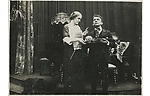
Alice Verden, Erich Ponto (both front)
Alice Verden, Erich Ponto
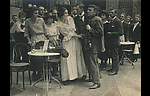
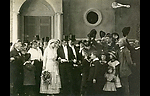
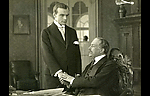
Still from "Christa Hartungen"
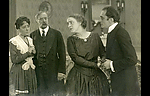
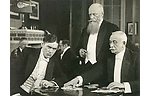
Olga Engl, Adolf Klein, Henny Porten, Theodor Loos (from left to right)
Paul Hartmann, Adolf Klein (from left to right)
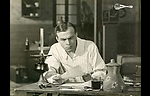
Paul Hartmann
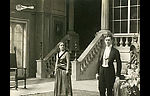
Henny Porten, Alexander von Antalffy
Still with Alexander von Antalffy (on the left)
O. Verf.. „Kino und Kirche.“ Bild & Film. Zeitschrift für Lichtbilderei und Kinematographie III, 3/4 (1913/1914): 73-74. Beschlüsse der Fuldaer Bischofskonferenz von 20.8.1913. Schulpflichtigen ...
Felix, F.. „Die Kinematographie der Töne.“ Bild & Film. Zeitschrift für Lichtbilderei und Kinematographie III, 3/4 (1913/1914): 78-79. Meldung über erste Versuche, Film-und Tonaufnahmen zu sync...
W.R.. „Historische Filme.“ Bild & Film. Zeitschrift für Lichtbilderei und Kinematographie III, 3/4 (1913/1914): 86. Der Rezensent führt den Film als Beispiel dafür an, dass die Filmindustrie mi...
Hellwig, Albert. „Die Plakatzensur in Preussen.“ Bild & Film. Zeitschrift für Lichtbilderei und Kinematographie III,5 (1913/1914): 104-106. Rekapitulierung der Rechtslage zu Filmplakaten.
O. Verf.. „Preußischer Ministerialerlaß über das Plakat- und Reklamewesen.“ Bild & Film. Zeitschrift für Lichtbilderei und Kinematographie III, 5 (1913/1914): 111-112. Filmplakate bedürfen de...
Warstat, W.. „Kino und Schule. Von Prof. Dr. A. Sellmann.“ Bild & Film. Zeitschrift für Lichtbilderei und Kinematographie III,5 (1913/1914): 116-117. Der Rezensent sieht die Verwendung von Filmen...
Fritze, G.A.. „Die Kinematographie im Dienste der Industrie.“ Bild & Film. Zeitschrift für Lichtbilderei und Kinematographie III,6 (1913/1914): 124-128. Erörterung der bereits erfolgten Verwendu...
Felix, F.. "Rektor Lemkes „Reichsausschuß“." Bild & Film. Zeitschrift für Lichtbilderei und Kinematographie III, 6 (1913/1914): 134-137. Bericht über einen Reichsausschuss für wissenschaftlich...