General scenes of destruction with British troops in the middle distance, showing mainly the damage done to the church, inside and out, and a water-filled crater.
Damage done to the village of Ri...
I. A Machine Gun Section of seven men with one Lewis gun walking in line across an open field comes to a ridge, and the men form for action. Four men go forward to set up the machine gun (a gunner, a ...
The camp is mainly of wooden huts with a few permanent buildings, for German NCOs and other ranks. Roll-call is taken early in the morning by the Germans themselves. Most are wearing patched uniforms ...
I. (Reel 1) The Western Front 1916, re-edited sections of IWM 116 BATTLE OF THE ANCRE, using the same scenes and captions as the original, but not in the same order. This covers events in the middle p...
A schoolmaster drives a tram as a part-time job. Other men board lorries taking them to work part-time on farms on Sundays. They are "of all classes, from lawyers to navvies". People without local all...
The film stresses the need for part-time work to win the war. A schoolmaster drives a tram. Ladies make bandages, limb supports and other hospital items. Carpenters make crutches. Elderly part-time wo...
Several shots of pigs feeding from troughs (some but not all of these shots are used in IWM 447B). Various shots of people making bandages, artificial limbs and crutches (most material used in IWM 447...
The funeral of a nurse killed when one of the British military hospitals in France was bombed (deliberately, according to the film) by the Germans in their March offensive. The caption style which is ...
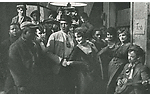
Still with Colette Corder (front, in the middle)
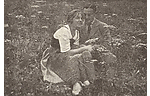
Ossi Oswalda, Julius Dewald
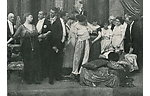
Still from "Die rätselhafte Sphinx"
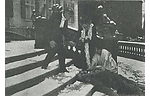
Still from "Der Schwur der Renate Rabenau"
Still from "Störe nicht die Flitterwochen"
Still with Carl de Vogt (on the left, sitting)
Still with Carl Clewing (front, on the left)
Still from "Die Topharmumie"
Rosenthal, Alfred. "Kinoreformatorische Entdeckungsreisen im Regierungsbezirk Minden." Bild & Film. Zeitschrift für Lichtbilderei und Kinematographie III, 1 (1913/1914): 17. A.R. berichtet von seinen...
Sellmann, Adolf. "Neue Lehrhafte Filme (Von Mitte August bis Anfang Oktober)", Bild & Film. Zeitschrift für Lichtbilderei und Kinematographie III, 1 (1913/1914): 20-22. A.S. stellt die neuesten Lehrf...
Dr. Hellwig. "Plakatwesen in Bayern." Bild & Film. Zeitschrift für Lichtbilderei und Kinematographie III, 1 (1913/1914): 23. Das Anbringen von Filmplakaten sei ohne polizeiliche Genehmigung noch imme...
O. Verf.. „Auswüchse in der Reklame der Lichtbildtheater.“ Bild & Film. Zeitschrift für Lichtbilderei und Kinematographie III,1 (1913/1914): 24. Die Stadt Bamberg habe eine Verordnung erlassen, ...
Stein, O. Th.. "Der Kinematograph als moderne Zeitung." Bild & Film. Zeitschrift für Lichtbilderei und Kinematographie III, 2 (1913/1914): 25-28. Stein beschreibt die Wochenschau in den Kinos als sch...
O.Verf.. "Kino und Katholikentag in Metz." Bild & Film. Zeitschrift für Lichtbilderei und Kinematographie III,2 (1913/1914): 40. Auf dem Katholikentag in Metz sei eine Resolution beschlossen worden, ...
Hansen, Fritz. "Photographien als Reklamebilder für Kinotheater" Bild & Film. Zeitschrift für Lichtbilderei und Kinematographie III,2 (1913/1914): 40-42. Hinweise auf das bestehende Urheberrecht in ...
Frankemölle, Wenzel. "In diesem Zeichen wirst du siegen." Bild & Film. Zeitschrift für Lichtbilderei und Kinematographie III,2 (1913/1914): 45-45. Frankemölle lobt den Historienfilm "In hoc signo v...