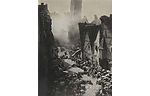
A German 150mm gun is towed into a wood east of Ribecourt on the Marcoing road by a Mark IV female tank HMLS 'Intimidate' (of 'I' Company, Tank Corps ?) and met by men of the Royal Artillery and (prob...
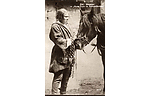
Asquith has his back to the camera throughout. He is first shown talking with British officers near Contay, then at the Royal Flying Corps base at Fienvillers watching a Sopwith 1-1/2 Strutter of 70 S...
The film opens with views of two sets of ruins, one with children playing. This is followed by close-ups, probably in both Babylon and Ctesiphon, of "carvings, depicting biblical incidents, hewn out o...
The syrup is collected in March, when the farmer drills a small hole in the tree then attaches a wooden "spile" for the sap to flow out of, and a bucket in which the sap is collected. The sap from sev...
The film appears to start in Calcutta with street scenes, and views of some of the buildings, both Western and Eastern in influence. A funeral procession takes place, ending at the river. Further inla...
A man in the uniform of an RFC flight sergeant prepares the camera on a workbench. First the lens cap is removed and the lens cleaned. Then he sets the blind aperture and the exposure indicator to zer...
The cadets, on the ground, study maps. Two of them climb out of a Bristol F2B Fighter after a training flight. One has his parachute harness checked. Another tries to control his parachute on the grou...
A Vickers Virginia bomber is set up to be fired from one of the catapults. First, a pilot gets into a smaller aircraft, a Fairey IIIF (not a seaplane) which is launched by one version of the catapult,...
"Der Golem, wie er in die Welt kam" (1920)
Paul Wegener
Paul Wegener
Lyda Salmonova
Poster design
Still from "Rübezahls Hochzeit"
Oscar Geller, Detektiv-Filme, Der Kinematograph, 593, (1918), S. 21-25. Eröterung der Krimiwelle. Man könne Krimis nicht einfach als Schund abtun. Auch wenn viele der frühen Krimis, maßgeblich aus...
Poldi Schmidl, Der Kinobesitzer als Staatsbeamter, Der Kinematograph, 607, (1918). Angesichts der geplanten Konzessionspflicht für Kinobesitzer wird die Möglichkeit einer Verstaatlichung der Filmind...
Argus, Neuheiten auf dem Berliner Filmmarkte, Der Kinematograph, 614, (1918). "Kinder der Liebe" als Tendenz- und Aufklärungsfilm bezeichnet, dessen Absicht überzeuge. "Der Gefangene von Dahomey" se...
Egon Jacobsohn, Ferdinand Lassalle, Der Kinematograph, 615, (1918), S. 18-30. Bericht von der Uraufführung in Berlin. Die Aufführung sei ein voller Erfolg gewesen, zumal es besonders gut in die Zeit...
Deutsche Lichtbild Gesellschaft e.V., Der Friedensreiter, Der Kinematograph, 618, (1918), S.22-23.
Emil Perlmann, Wenn die Waffen ruhen...!, Der Kinematograph, 619, (1918). Erörterung der Lage der Filmindustrie angesichts des greifbaren Kriegsendes. Die Filmindustrie müsse den Kampf gegen die Zen...
Der deutsche Film für das Ausland, Der Kinematograph, 620, (1918). Es sei Aufgabe der deutschen Filmindustrie, den negativen Vorstellungen über Deutschland, die im Ausland im Krieg verbreitet worden...
Universum Filmverleih, Die Waffen nieder, Der Kinematograph, 620, (1918), S. 28-33.