The year is 1915. The French air force, fighting on the front lines, is divided into bomber, reconnaissance, and fighter plane squadrons. Before taking off, the pilots responsible for bombing enemy li...
A historical chronicle spanning from 1913 to 1918, created by this formation's elders and dedicated to Drs. Dardennois and Rouvillois, Heads of the Health Service. The description, operation and evolu...
During World War I, the Americans support the Allies. In order to prevent people from dying of hunger, they send goods to France, then Belgium. Tons of flour and wheat are unloaded from barges, as wel...
Prisoners are searched after the battle. Mail is distributed to the Scottish. British soldiers show their spoils of war and return to the camp. Areas of Martinpuich and Beaumont-Hamel are destroyed an...
Little Ginette learns from a newspaper that Amama, a "Turco" (a soldier from the French colonies), has been decorated for his superb feats in battle. In admiration of his incredible bravery, the young...
In Champagne, relief of the 22nd regiment of dragoons, preceded by its music. Backlighting on the parade of horsemen. The deployment of signs on the ground for an airplane responsible for guiding the ...
A military plane's propellor rotations are seen from the side and from the front;
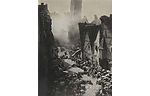
Verdun after six months of fighting: panoramas of the destruction on the banks of the Meuse River, downtown, at the citadel and in the cathedral. Firefighters taking action. General Dubois giving comm...
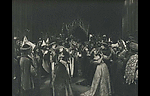
"Der Golem, wie er in die Welt kam" (1920)
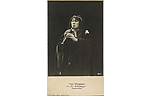
Paul Wegener
Paul Wegener
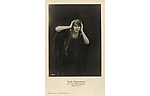
Lyda Salmonova
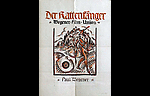
Poster design
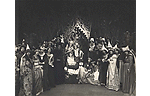
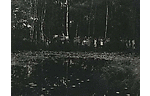
Still from "Rübezahls Hochzeit"
O. Verf.. „Krieg und Kino.“ Der Kinematograph 397 (1914): 3-4. Bericht, wie bislang der Film in Kriegen eingesetzt worden sei. Ratschläge an Kinobesitzer, wie sie sich zu verhalten hätten. Mutma...
O. Verf.. „Mars regiert die Stunde.“ Der Kinematograph 397 (1914): 5-8. Aufruf an die Kinoindustrie, sich angesichts des Krieges in die Dienste des Vaterlandes zu stellen. Vorschlag, möglichst ak...
Mit der Kamera in der Schlachtfront.“ Der Kinematograph 397 (1914): 7. Werbeanzeige, die die Bedeutung der Filmaufnahmen gerade angesichts des drohenden Krieges hervorhebt.
Aubinger, Josef: „Die Kinematographie in Kriegszeiten.“ Der Kinematograph 398 (1914): 3-5. Artikel, der die mögliche Zukunft des Kinowesens im Krieg beschreibt. Die wirtschaftliche Lage der Kinos...
O. Verf.. „Schliesst die Kinos nicht.“ Der Kinematograph 399 (1914): 3-4. Aufruf an die Kinoindustrie, die Kinos nicht zu schließen, da das Volk in Kriegszeiten Ablenkung brauche. Die Eintrittspr...
Monopolfilm-Vertriebs-GmbH..“Patriotisches Kriegs-Programm.“ Der Kinematograph 399 (1914): 5. Werbung für das aktuelle Filmprogramm der Monopolfilm GmbH.
Asta-Nielsen-Lichtspiele GmbH. „Bismarck. Die neuesten Aufnahmen aus den Kriegstagen.“ Der Kinematograph 400 (1914): 1. Werbung, mit dem Hinweis, dass der Stoff des Filmes den ernsten Kriegstagen ...
O. Verf.. „Der Mangel an Aktualitäten.“ Der Kinematograph 400 (1914): 3-4. Artikel, der den Mangel an aktuellen Aufnahmen aus dem Krieg beklagt. Der Krieg sei die richtige Gelegenheit für die Pr...