The year is 1915. The French air force, fighting on the front lines, is divided into bomber, reconnaissance, and fighter plane squadrons. Before taking off, the pilots responsible for bombing enemy li...
A historical chronicle spanning from 1913 to 1918, created by this formation's elders and dedicated to Drs. Dardennois and Rouvillois, Heads of the Health Service. The description, operation and evolu...
During World War I, the Americans support the Allies. In order to prevent people from dying of hunger, they send goods to France, then Belgium. Tons of flour and wheat are unloaded from barges, as wel...
Prisoners are searched after the battle. Mail is distributed to the Scottish. British soldiers show their spoils of war and return to the camp. Areas of Martinpuich and Beaumont-Hamel are destroyed an...
Little Ginette learns from a newspaper that Amama, a "Turco" (a soldier from the French colonies), has been decorated for his superb feats in battle. In admiration of his incredible bravery, the young...
In Champagne, relief of the 22nd regiment of dragoons, preceded by its music. Backlighting on the parade of horsemen. The deployment of signs on the ground for an airplane responsible for guiding the ...
A military plane's propellor rotations are seen from the side and from the front;
Verdun after six months of fighting: panoramas of the destruction on the banks of the Meuse River, downtown, at the citadel and in the cathedral. Firefighters taking action. General Dubois giving comm...
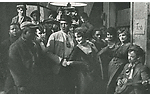
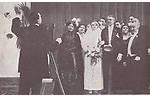
Still with Colette Corder (front, in the middle)
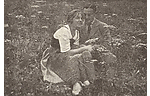
Ossi Oswalda, Julius Dewald
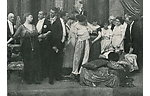
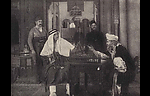
Still from "Die rätselhafte Sphinx"
Still from "Der Schwur der Renate Rabenau"
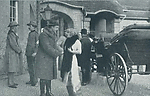
Still from "Störe nicht die Flitterwochen"
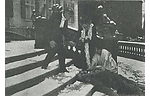
Still with Carl de Vogt (on the left, sitting)
Still with Carl Clewing (front, on the left)
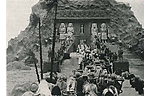
Still from "Die Topharmumie"
O. Verf.. „Kino und Kirche.“ Bild & Film. Zeitschrift für Lichtbilderei und Kinematographie III, 3/4 (1913/1914): 73-74. Beschlüsse der Fuldaer Bischofskonferenz von 20.8.1913. Schulpflichtigen ...
Felix, F.. „Die Kinematographie der Töne.“ Bild & Film. Zeitschrift für Lichtbilderei und Kinematographie III, 3/4 (1913/1914): 78-79. Meldung über erste Versuche, Film-und Tonaufnahmen zu sync...
W.R.. „Historische Filme.“ Bild & Film. Zeitschrift für Lichtbilderei und Kinematographie III, 3/4 (1913/1914): 86. Der Rezensent führt den Film als Beispiel dafür an, dass die Filmindustrie mi...
Hellwig, Albert. „Die Plakatzensur in Preussen.“ Bild & Film. Zeitschrift für Lichtbilderei und Kinematographie III,5 (1913/1914): 104-106. Rekapitulierung der Rechtslage zu Filmplakaten.
O. Verf.. „Preußischer Ministerialerlaß über das Plakat- und Reklamewesen.“ Bild & Film. Zeitschrift für Lichtbilderei und Kinematographie III, 5 (1913/1914): 111-112. Filmplakate bedürfen de...
Warstat, W.. „Kino und Schule. Von Prof. Dr. A. Sellmann.“ Bild & Film. Zeitschrift für Lichtbilderei und Kinematographie III,5 (1913/1914): 116-117. Der Rezensent sieht die Verwendung von Filmen...
Fritze, G.A.. „Die Kinematographie im Dienste der Industrie.“ Bild & Film. Zeitschrift für Lichtbilderei und Kinematographie III,6 (1913/1914): 124-128. Erörterung der bereits erfolgten Verwendu...
Felix, F.. "Rektor Lemkes „Reichsausschuß“." Bild & Film. Zeitschrift für Lichtbilderei und Kinematographie III, 6 (1913/1914): 134-137. Bericht über einen Reichsausschuss für wissenschaftlich...