The year is 1915. The French air force, fighting on the front lines, is divided into bomber, reconnaissance, and fighter plane squadrons. Before taking off, the pilots responsible for bombing enemy li...
A historical chronicle spanning from 1913 to 1918, created by this formation's elders and dedicated to Drs. Dardennois and Rouvillois, Heads of the Health Service. The description, operation and evolu...
During World War I, the Americans support the Allies. In order to prevent people from dying of hunger, they send goods to France, then Belgium. Tons of flour and wheat are unloaded from barges, as wel...
Prisoners are searched after the battle. Mail is distributed to the Scottish. British soldiers show their spoils of war and return to the camp. Areas of Martinpuich and Beaumont-Hamel are destroyed an...
Little Ginette learns from a newspaper that Amama, a "Turco" (a soldier from the French colonies), has been decorated for his superb feats in battle. In admiration of his incredible bravery, the young...
In Champagne, relief of the 22nd regiment of dragoons, preceded by its music. Backlighting on the parade of horsemen. The deployment of signs on the ground for an airplane responsible for guiding the ...
A military plane's propellor rotations are seen from the side and from the front;
Verdun after six months of fighting: panoramas of the destruction on the banks of the Meuse River, downtown, at the citadel and in the cathedral. Firefighters taking action. General Dubois giving comm...
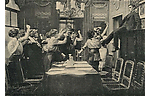
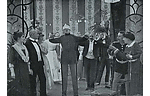
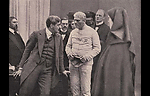
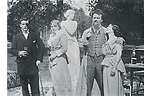
Still from "Der Film von der Königin Luise. 3. Abteilung: Die Königin der Schmerzen"
Still from "Gebrochene Schwingen"
Still from "Das Liebesbarometer"
Still from "Ein Mädchen zu verschenken"
Still from "Paragraph 80, Absatz II"
Still from "Reingefallen"
Still from "Schuldig"
Still from "Die Statue"
Oscar Geller, Detektiv-Filme, Der Kinematograph, 593, (1918), S. 21-25. Eröterung der Krimiwelle. Man könne Krimis nicht einfach als Schund abtun. Auch wenn viele der frühen Krimis, maßgeblich aus...
Poldi Schmidl, Der Kinobesitzer als Staatsbeamter, Der Kinematograph, 607, (1918). Angesichts der geplanten Konzessionspflicht für Kinobesitzer wird die Möglichkeit einer Verstaatlichung der Filmind...
Argus, Neuheiten auf dem Berliner Filmmarkte, Der Kinematograph, 614, (1918). "Kinder der Liebe" als Tendenz- und Aufklärungsfilm bezeichnet, dessen Absicht überzeuge. "Der Gefangene von Dahomey" se...
Egon Jacobsohn, Ferdinand Lassalle, Der Kinematograph, 615, (1918), S. 18-30. Bericht von der Uraufführung in Berlin. Die Aufführung sei ein voller Erfolg gewesen, zumal es besonders gut in die Zeit...
Deutsche Lichtbild Gesellschaft e.V., Der Friedensreiter, Der Kinematograph, 618, (1918), S.22-23.
Emil Perlmann, Wenn die Waffen ruhen...!, Der Kinematograph, 619, (1918). Erörterung der Lage der Filmindustrie angesichts des greifbaren Kriegsendes. Die Filmindustrie müsse den Kampf gegen die Zen...
Der deutsche Film für das Ausland, Der Kinematograph, 620, (1918). Es sei Aufgabe der deutschen Filmindustrie, den negativen Vorstellungen über Deutschland, die im Ausland im Krieg verbreitet worden...
Universum Filmverleih, Die Waffen nieder, Der Kinematograph, 620, (1918), S. 28-33.