In 1917, in Paris, the sidewalks in front of the movie theaters are packed. On a quieter street, two soldiers from the colonial forces negotiate with a prostitute in front of a brothel.
In 1917, during World War I, street vendors sell the contents of their carts in the streets of Paris.
On July 4, 1920, at Iéna Square in Paris, officials place flowers a the foot of Washington's statue then give speeches. Next, troops march down President Wilson Avenue and war orphans parade down Cha...
On September 30, 1919, Armenian volunteers march in the rain at Invalides to commemorate having fought at the Allies' side during World War I. A camera operator films the scant crowd.
In 1917, Chinese workers who have come to France to support the Allies in the war effort, move forward in a line then disperse, as some civilians look on.
In August 1918, during World War I, Parisians can protect themselves from bombings by German Gothas by hiding in public shelters with varying capacities. To prevent glass from falling, shops and depar...
In August 1918, during World War I, the city of Havre is a swarm of activity. The naval base of the Belgian, British, and American forces, many soldiers transit through this city. At the port, shuttle...
In January 1921 in Paris, many unemployed workers stand in line in front of a soup kitchen. A police officer makes sure that the line is organized and functioning smoothly.
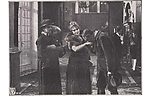
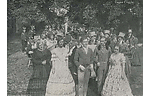
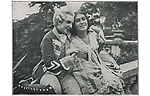
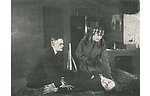
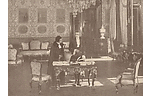
Still from "Die einsame Insel"
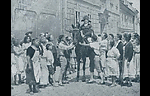
Still from "Eugen Onegin"
Hella Moja, Claire Selo (from left to right)
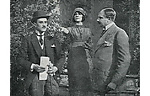
Paul Kronegg, Traute Carlsen, Franz Herterich (from left to right)
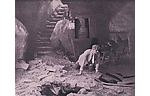
Still from "Der Graf von Cagliostro"
Still from "Der Herzog von Reichstadt"
Hans Mierendorff
Still with Asta Nielsen
Spectator. "Der heutige Stand der Kinoreform." Bild & Film. Zeitschrift für Lichtbilderei und Kinematographie III, 3/4 (1913/ 1914): 49-56. Der Autor warnt vor den Gefahren, die vom Kino ausgingen un...
Häfker, Hermann. "Sind die 'kleinen' Kinotheater der Reform schädlich?" Bild & Film. Zeitschrift für Lichtbilderei und Kinematographie III, 3/4 (1913/1914): 58-60. Häfker geht davon aus, dass die ...
Schumacher, Carl. "Zur 'Kinodramatik'." Bild & Film. Zeitschrift für Lichtbilderei und Kinematographie III, 3/4 (1913/1914): 63-64. Schumacher stellt die Abwesenheit von Dialogen als das Hauptproblem...
O. Verf.. "Kino-Kritik." Bild & Film. Zeitschrift für Lichtbilderei und Kinematographie III, 3/4 (1913/1914): 68-69. Obwohl immer wieder Forderungen nach der Hebung des Niveaus im Kino laut würden, ...
O. Verf.. "Das Kinoplakat." Bild & Film. Zeitschrift für Lichtbilderei und Kinematographie III, 3/4 (1913/1914): 70. Meldung über die zunehmende Hebung des Niveaus von Kinoplakaten. Statt auf grelle...
O. Verf.. "Die Kinematographie auf dem 85. Naturforschertag in Wien." Bild & Film. Zeitschrift für Lichtbilderei und Kinematographie III, 3/4 (1913/1914): 70-71. Meldung über den Einsatz von Filmen ...
O. Verf.. „Polizeiverordnung für das Rheinland.“ Bild & Film. Zeitschrift für Lichtbilderei und Kinematographie III, 3/4 (1913/1914): 72-73. Meldung über den Einsatz von Filmen als illustrieren...
O. Verf.. „Ein Kinematographengesetz in Württemberg.“ Bild & Film. Zeitschrift für Lichtbilderei und Kinematographie, III, 3/4 (1913/1914): 73. Jeder Film, der öffentlich vorgeführt werde, mü...