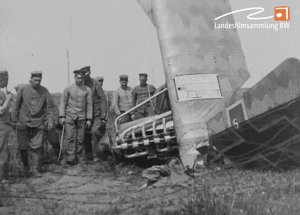
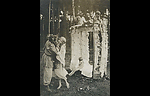
Disassembling of a crashed airplane.
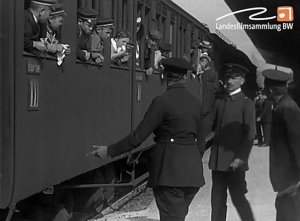
Bustling platform at the station of Ulm. Passengers, among them many children and Lina Hähnle (1851 - 1941, founder of German association for protection of birds), boarding and deboarding a train. Fe...
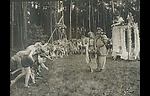
On January 24, 1915, the "Vlad Tepes" Boy Scout Legion from Braila takes the oath in the presence of Prince Charles, the royal heir, commander and general inspector of Romania's Great Boy Scout Legio...
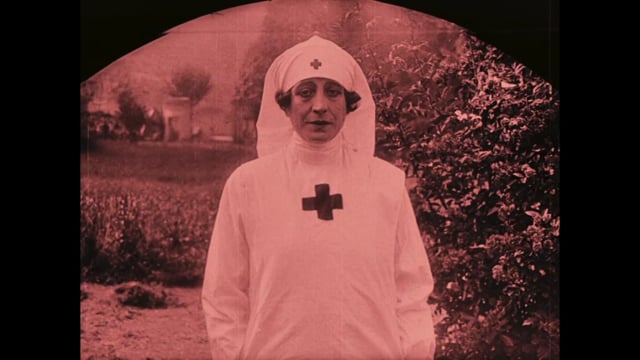
A patriotic drama played by one of the most beloved actresses of early Italian cinema: Mary Cléo Tarlarini is Mary, a high society lady who devotes all her dedication to the Italian patriotic cause, ...
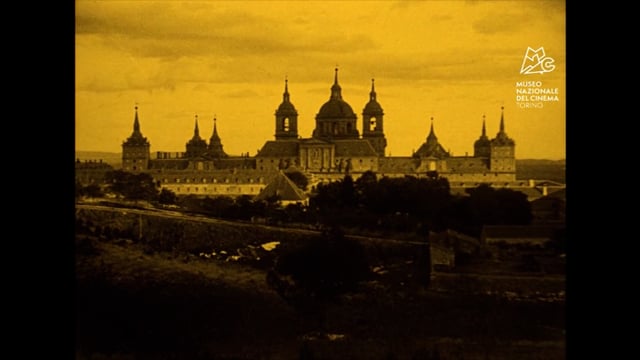
Vistas of some of the most well-known Spanish locations: Madrid, Barcelona, the bay of St. Sebastian, Burgos, Segovia, Malaga. It shows cock fights, the palace of the Alhambra in Granada and banks fil...
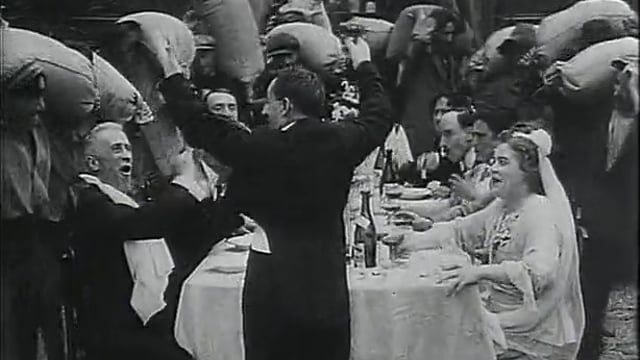
Cretinetti is about to get married and he could not be any happier and more in love with his Junoesque consort. But just on the day of his wedding, he reads a notice on the wall explaining how to beha...
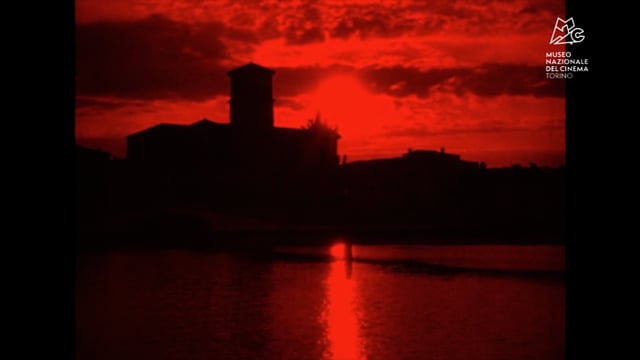
The film is made up of three episodes: In the gulf of La Spezia, The Val D’Aosta and In the Picturesque Lagoon. It is probably a new edition distributed by Tiziano Film in which older films produced...
War documentary filmed in Val Camonica (Brescia). The film begins with images of supplies being downloaded from a train at the station of Edolo. Bread, tins of beef and cheeses were destined for the s...
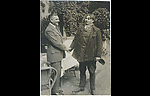
Rochus Gliese, Paul Wegener (from left to right)
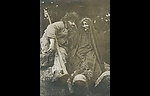
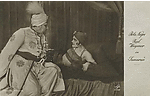
Still with Lyda Salmonova, Paul Wegener (on the right, front)
Arthur Ehrens, Paul Wegener (from left to right)
Paul Wegener, Hedwig Gutzeit
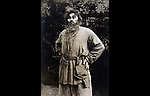
Paul Wegener
Paul Wegener, Lyda Salmonova
Paul Wegener, Pola Negri
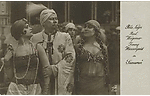
Pola Negri, Paul Wegener, Jenny Hasselquist (from left to right)
Spectator. "Der heutige Stand der Kinoreform." Bild & Film. Zeitschrift für Lichtbilderei und Kinematographie III, 3/4 (1913/ 1914): 49-56. Der Autor warnt vor den Gefahren, die vom Kino ausgingen un...
Häfker, Hermann. "Sind die 'kleinen' Kinotheater der Reform schädlich?" Bild & Film. Zeitschrift für Lichtbilderei und Kinematographie III, 3/4 (1913/1914): 58-60. Häfker geht davon aus, dass die ...
Schumacher, Carl. "Zur 'Kinodramatik'." Bild & Film. Zeitschrift für Lichtbilderei und Kinematographie III, 3/4 (1913/1914): 63-64. Schumacher stellt die Abwesenheit von Dialogen als das Hauptproblem...
O. Verf.. "Kino-Kritik." Bild & Film. Zeitschrift für Lichtbilderei und Kinematographie III, 3/4 (1913/1914): 68-69. Obwohl immer wieder Forderungen nach der Hebung des Niveaus im Kino laut würden, ...
O. Verf.. "Das Kinoplakat." Bild & Film. Zeitschrift für Lichtbilderei und Kinematographie III, 3/4 (1913/1914): 70. Meldung über die zunehmende Hebung des Niveaus von Kinoplakaten. Statt auf grelle...
O. Verf.. "Die Kinematographie auf dem 85. Naturforschertag in Wien." Bild & Film. Zeitschrift für Lichtbilderei und Kinematographie III, 3/4 (1913/1914): 70-71. Meldung über den Einsatz von Filmen ...
O. Verf.. „Polizeiverordnung für das Rheinland.“ Bild & Film. Zeitschrift für Lichtbilderei und Kinematographie III, 3/4 (1913/1914): 72-73. Meldung über den Einsatz von Filmen als illustrieren...
O. Verf.. „Ein Kinematographengesetz in Württemberg.“ Bild & Film. Zeitschrift für Lichtbilderei und Kinematographie, III, 3/4 (1913/1914): 73. Jeder Film, der öffentlich vorgeführt werde, mü...