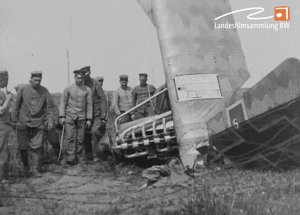
Disassembling of a crashed airplane.
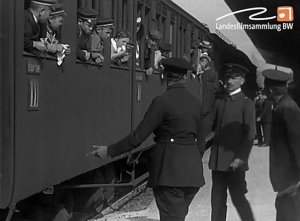
Bustling platform at the station of Ulm. Passengers, among them many children and Lina Hähnle (1851 - 1941, founder of German association for protection of birds), boarding and deboarding a train. Fe...
On January 24, 1915, the "Vlad Tepes" Boy Scout Legion from Braila takes the oath in the presence of Prince Charles, the royal heir, commander and general inspector of Romania's Great Boy Scout Legio...
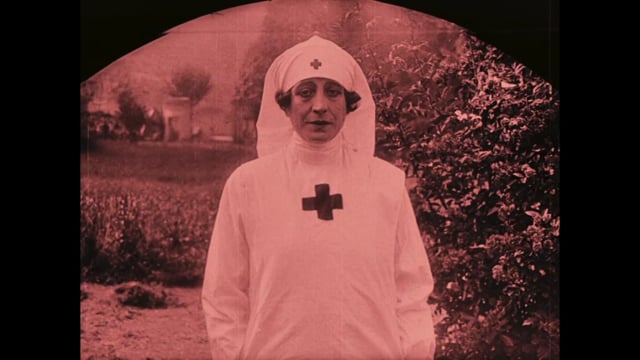
A patriotic drama played by one of the most beloved actresses of early Italian cinema: Mary Cléo Tarlarini is Mary, a high society lady who devotes all her dedication to the Italian patriotic cause, ...
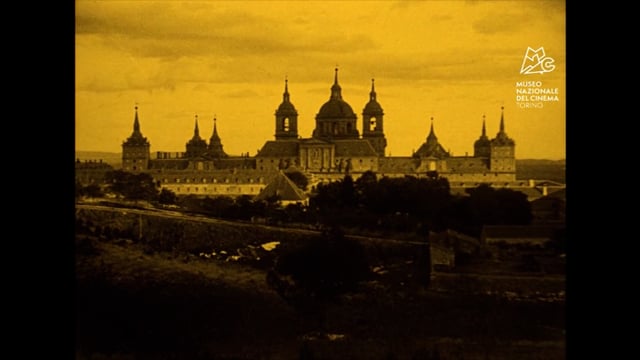
Vistas of some of the most well-known Spanish locations: Madrid, Barcelona, the bay of St. Sebastian, Burgos, Segovia, Malaga. It shows cock fights, the palace of the Alhambra in Granada and banks fil...
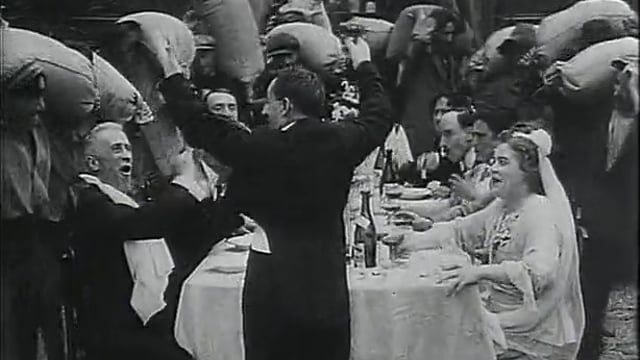
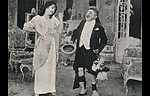
Cretinetti is about to get married and he could not be any happier and more in love with his Junoesque consort. But just on the day of his wedding, he reads a notice on the wall explaining how to beha...
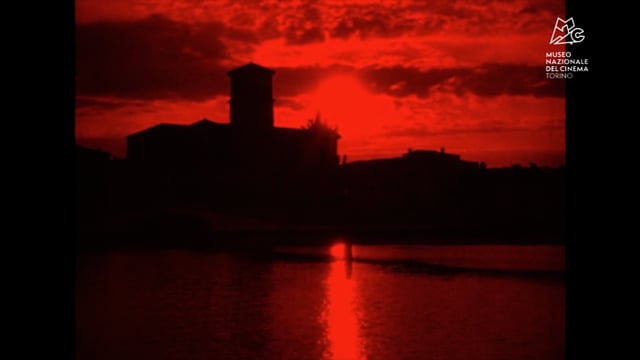
The film is made up of three episodes: In the gulf of La Spezia, The Val D’Aosta and In the Picturesque Lagoon. It is probably a new edition distributed by Tiziano Film in which older films produced...
War documentary filmed in Val Camonica (Brescia). The film begins with images of supplies being downloaded from a train at the station of Edolo. Bread, tins of beef and cheeses were destined for the s...
Still from "Der Film von der Königin Luise. 3. Abteilung: Die Königin der Schmerzen"
Still from "Gebrochene Schwingen"
Still from "Das Liebesbarometer"
Still from "Ein Mädchen zu verschenken"
Still from "Paragraph 80, Absatz II"
Still from "Reingefallen"
Still from "Schuldig"
Still from "Die Statue"
P., E.. „Französische und englische Films!.“ Der Kinematograph 400 (1914): 7-8. Der Verfasser behauptet, das Filmwesen sei von französischen Agenten beeinflusst. Jahrzehntelang hätten französi...
O. Verf.. „Der Kinematograph im Dienste des Heeres.“ Der Kinematograph 401 (1914): 3-4. Artikel über die Möglichkeiten, Filmtechnik militärisch nutzbar zu machen. Der Film sei nicht nur zu Zwec...
Martin Dentler GmbH. „Die richtigen Films zur richtigen Zeit.“ Der Kinematograph, 401 (1914): 11. Werbeanzeige, die mit der Bedeutung der beworbenen Filme angesichts des Krieges wirbt.
Eiko Film. „"Eiko-Woche“ ist die beste Kriegsberichterstattung" Der Kinematograph 404 (1914): 1.
Emscher, Horst: „Der Krieg und die deutsche Filmindustrie.“ Der Kinematograph 404 (1914): 5-6. Erörterung der wirtschaftlichen Lage der deutschen Filmindustrie. Entgegnet dem Vorwurf, dass die Be...
O. Verf.. „Das Programm in Kriegszeiten.“ Der Kinematograph 405 (1914): 8. Obwohl viele Kinos geschlossen hätten, würden die Besucherzahlen in den Kinos immer weiter zunehmen. Dies sei insbesond...
Eiko Film, Ich kenne keine Parteien mehr, Der Kinematograph, 406, (1914), S. 1. Werbeanzeige mit Hinweis auf "Beseitigung der Zensurschwierigkeiten".
Nordisk Films GmbH, Jede Woche neue Kriegs-Aufnahmen, Der Kinematograph 406, (1914), S. 3. "Jede Woche abwechselnd neue Kriegsaufnahmen vom Westen und Osten (eigene Expeditionen)".