(Reel 1) Off the British coast, U-boat 32 attacks merchant ships. The German captain, Stackmeyer, is saluted by his Admiral, who warns that the blockade of Britain will be tightened; later, the U-boat...
A collection of fragments of British and Australian aviation film of the First World War period.
Subtitled "The work of the Department of the Director General Voluntary Organisations including the Camps Library". Introductory shot of the Director General Sir Edward Ward seated in his office in Sc...
VICTORY - GOD BLESS THE BRITISH ARMY THAT HAS SAVED OUR HOMES AND OUR ALL!: Stock footage of mortar launcher, bi-plane, and tanks. AND OUR INDOMITABLE SONS OF THE SEA WHO HAVE SAVED US AND OUR ALLIES ...
The assembly groups the films into episodes as follows: (Reel 1) Salonika, the voyage to Egypt, the ceremony of the drums, the aeroplane flight; (Reel 2) the horse show, scenes at a 'cactus patch' loc...
Four reels of very jumbled material, mainly out-of-focus or of poor quality. The first reel is mainly of fragments from the Western Front 1916-1918 taken by British official cameramen, the remainder f...
The film appears to be of the intervention in North Russia, but varies in quality from slightly out of focus to completely blurred.
Blurred and unviewable film of the British intervention in Nort...
The regiments are as follows. The Civil Service Rifles (a battalion of the Royal Fusiliers). The London Scottish (1/14th Battalion, the London Regiment). Pipers of the Argyll and Sutherland Highlander...
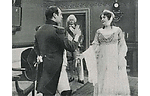
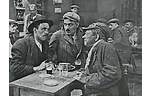
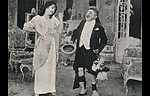
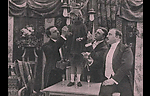
Still from "Der Film von der Königin Luise. 3. Abteilung: Die Königin der Schmerzen"
Still from "Gebrochene Schwingen"
Still from "Das Liebesbarometer"
Still from "Ein Mädchen zu verschenken"
Still from "Paragraph 80, Absatz II"
Still from "Reingefallen"
Still from "Schuldig"
Still from "Die Statue"
Emil Gobbers, Das Filmdrama im Zeichen der Revolution, Der Kinematograph, 652, (1919), S. 15-16. Der Film sei dazu berufen, die Ausdrucksform einer neuen Kunst für eine neue Zeit zu sein. Wenn sich d...
Egon Jacobsohn, Neuheiten auf dem Berliner Filmmarkte, Der Kinematograph, 652, (1919), S. 21. "Die Welt, der große Kuppler" wird als kitschig und misslungen bewertet, ebenso "Die Postanweisung". "Ich...
R. Genenncher, Die Amerikaner, Der Kinematograph, 658, (1919), S. 19-20. Die amerikanische Filmindustrie sei vergleichsweise konservativ und bringe noch immer ähnliche Filme hervor, wie vor zehn Jahr...
L. B., Berliner Filmneuheiten, Der Kinematograph, 667, (1919), S. 25-27. "Kaiser Wilhelms Glück und Ende" sei noch am Vortag der Uraufführung vom Innenministerium verboten worden. Der Film stelle ei...
R.Genenncher, Der Aufklärungsfilm, Der Kinematograph, 669, (1919), S. 16. Der Aufklärungsfilm habe seine Hochzeit hinter sich. Dem eigentlich hohen und lobenswerten Anliegen des Genres habe es gesch...
Das Wichtigste der Woche, Der Kinematograph, 670, (1919), S. 25-26. Seit dem 2.11.1919 gebe es in Berlin eine freiwillige Filmzensur. Die USPD habe im Reichstag den Antrag gemacht, die Kinos zu versta...
Rolf Randolf Film, Der Doppelmord in Sarajewo, Der Kinematograph, 670, (1919), S. 3?.
Die Kommunalisierung, Der Kinematograph, 672, (1919), S. 32-33. Plädoyer gegen die Pläne der Verstaatlichung aller Kinos. Die Verstaatlichung schade nur dem Staat, blähe die Bürokratie unnötig au...