Tragična sudbina jedne srpske seoske porodice u I svetskom ratu, za vreme austrijske okupacije. Muž odlazi u rat gde biva ranjen a ženu siluju i ubijaju okupatori. Deda spašava tek rođenog unuka...
One Serbian army battery in the First World War, in forced march with no stopping and rest, arrives to Cer and, in decisive moment, enters the fight and throws off Austrian troops which penetrated int...
After the retreat of the Serbian army through Albania in late 1915, the French fleet transported around 150,000 Serbs to the island of Corfu in January and February 1916. Soldiers, exhausted from a st...
Evokacija uspomena, posredstvom fotografija, arhivskog materijala i sačuvanih dokumenata, na borbe srpskog naroda u I svetskom ratu. Bitke na Ceru i Kolubari, povlačenje kroz Albaniju. Proboj Soluns...
On the occasion of the Battle of Cer anniversary, the first victory of the Allied army in World War I, on Vidovdan (Saint Vitus` Day) the 28th June 1928, the King Alexander unveiled the commemorative ...
CALVARY DIVISION IN THE 32ND SQUADRON UNDER LEADERSHIP OF HIS MAJESTY THE PRINCE ARSENIJE IN PRESEVO Several days after the final victory of Serbia over Bulgaria in the Second Balkan War, according to...
At the end of the World War I, considerably destroyed Austro-Hungarian regiment finds itself at the abandoned farmstead and its commander, the Colonel, tries in vain to make a connection with the high...
Aleksa Dundić, an officer of the Serbian volunteer corps in Russia during the Civil war, crossed over to the Red Army along with other four soldiers. Soon he distinguished himself with his valour and...
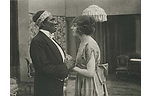
Paul Wegener, Lyda Salmonova
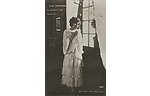
Lyda Salmonova
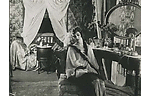
Lyda Salmonova
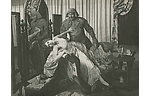
Lyda Salmonova, Paul Wegener
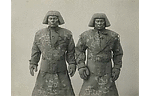
Golem-figures by sculptor Rudolf Belling
Paul Wegener
Still with Paul Wegener (in the middle)
Still with Henrik Galeen (first on the left), Paul Wegener (first from the right)
O. Verf.. „Krieg und Kino.“ Der Kinematograph 397 (1914): 3-4. Bericht, wie bislang der Film in Kriegen eingesetzt worden sei. Ratschläge an Kinobesitzer, wie sie sich zu verhalten hätten. Mutma...
O. Verf.. „Mars regiert die Stunde.“ Der Kinematograph 397 (1914): 5-8. Aufruf an die Kinoindustrie, sich angesichts des Krieges in die Dienste des Vaterlandes zu stellen. Vorschlag, möglichst ak...
Mit der Kamera in der Schlachtfront.“ Der Kinematograph 397 (1914): 7. Werbeanzeige, die die Bedeutung der Filmaufnahmen gerade angesichts des drohenden Krieges hervorhebt.
Aubinger, Josef: „Die Kinematographie in Kriegszeiten.“ Der Kinematograph 398 (1914): 3-5. Artikel, der die mögliche Zukunft des Kinowesens im Krieg beschreibt. Die wirtschaftliche Lage der Kinos...
O. Verf.. „Schliesst die Kinos nicht.“ Der Kinematograph 399 (1914): 3-4. Aufruf an die Kinoindustrie, die Kinos nicht zu schließen, da das Volk in Kriegszeiten Ablenkung brauche. Die Eintrittspr...
Monopolfilm-Vertriebs-GmbH..“Patriotisches Kriegs-Programm.“ Der Kinematograph 399 (1914): 5. Werbung für das aktuelle Filmprogramm der Monopolfilm GmbH.
Asta-Nielsen-Lichtspiele GmbH. „Bismarck. Die neuesten Aufnahmen aus den Kriegstagen.“ Der Kinematograph 400 (1914): 1. Werbung, mit dem Hinweis, dass der Stoff des Filmes den ernsten Kriegstagen ...
O. Verf.. „Der Mangel an Aktualitäten.“ Der Kinematograph 400 (1914): 3-4. Artikel, der den Mangel an aktuellen Aufnahmen aus dem Krieg beklagt. Der Krieg sei die richtige Gelegenheit für die Pr...