I. (Reel 5) Impressionistic to the point of incoherence. Starting with troops disembarking at a harbour. Marching columns, some of them identified: the Devonshire Regiment, some Scots, the Bedfordshir...
The King arrives at Calais and meets various military and civilian dignitaries. He is taken to General Haig's château at Beauquesne where with Haig and the Prince of Wales he meets President PoincarÃ...
The King, in Field Marshal's uniform and unaccompanied by other members of the Royal family, arrives at Calais on HMS Whirlwind on 5 August. Three days later he inspects British and US pilots of RAF 1...
(Reel 1) Near Bapaume a German "anti-tank gun" lies in an unidentifiable wreck with its crew dead beside it. Shells burst in the distance. Two 6-inch Mk VII guns are drawn by Holt tractors to new posi...
(Reel 1) Most of the scenes are of Indian troops of 15th Cavalry Brigade, 5th Cavalry Division. Also shown in the advance are the Nottinghamshire Battery, Royal Horse Artillery and 'A' Battery of the ...
I. The film is outspoken, "The evidence - both documentary and otherwise - is now ample to prove that Germany forced this great and terrible War upon humanity to secure for herself the domination of t...
I. The film is often disjointed, but covers the transfer of American manpower and matériel across the Atlantic, culminating in their first major engagement in the Battle of Château-Thierry in June 1...
(Reel 1) Albert Cathedral, mid-1916. The Canadian 6th Brigade, 2nd Division, led by Brigadier-General H D B Ketchen (past German prisoners) towards the battlefield, halts to rest at La Boisselle cross...
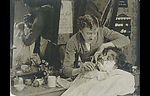
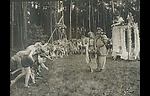
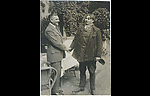
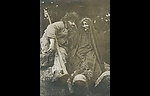
Rochus Gliese, Paul Wegener (from left to right)
Still with Lyda Salmonova, Paul Wegener (on the right, front)
Arthur Ehrens, Paul Wegener (from left to right)
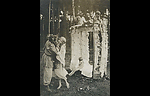
Paul Wegener, Hedwig Gutzeit
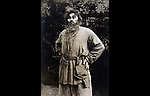
Paul Wegener
Paul Wegener, Lyda Salmonova
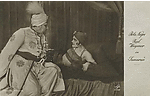
Paul Wegener, Pola Negri
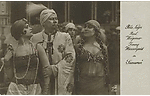
Pola Negri, Paul Wegener, Jenny Hasselquist (from left to right)
Das Königliche Bild-und Filmamt und die Industrie, Der Kinematograph, 571, (1917). S. 22ff. Artikel über Verhandlungen des Bild-und Filmamtes mit Vertretern der Filmindustrie. Bufa zeige sich am Woh...
Walter Thielemann, Der Film 1917, Der Kinematograph, 573, (1917), S. 12ff. Jahresrückblick. Positiv hervorgehoben wird die immer breitere Anerkennung, die dem Kino zuteil werde, da der immer mehr sei...
Scala-Film-Verleih GmbH, Der Hetman der Ukraine, Der Kinematograph, 581, (1918), S. 18-19. Die Anzeige geht auf den Sieg gegen Russland ein und erwähnt das Interesse des Publikums an der Geschichte d...
Argus, Neuheiten auf dem Berliner Filmmarkte, Der Kinematograph, 581, (1918), S. 28-29. "Edelsteine" wird als erstes besprochen und als psychologisch tiefgründiges Werk bezeichnet. An dritter Stelle ...
Argus, Der rasende Roland von Euskirchen, Der Kinematograph, 582, (1918), S. 6. Entgegnung auf Vorwürfe des Euskirchener Volksblattes, das Kino sei sittenverderbend. Der Schriftleiter Werner Rats kö...
Argus, Neuheiten auf dem Berliner Filmmarkte, Der Kinematograph, 586, (1918), S. 28ff. Besprochen werden gleich zwei Propagandafilme zur achten Kriegsanleihe. "Lloyd George in Berlin" wird als äußer...
Julius Sternheim, Propaganda-und Aufklärungsfilme, Der Kinematograph, 592, (1918), S. 12-14. Propagandafilme müssten maßgeblich eine Botschaft verfolgen, was sie oftmals zwangsläufig langatmig mac...
Ludwig Brauner, Die kommende Geschmackswandlung, Der Kinematograph, 593, (1918), S. 15-16. Erörterung des Publikumsgeschmacks. Gegenwärtig sei vor allem Ablenkung vom Kriegsalltag gefragt, jedoch li...