The 'big battle' structure of the film opens with the preparatory bombardment for the days before the attack, the Infantry marching to their final positions, the attack itself, the casualties, prisone...
The King and Queen arrive in Calais to start the visit. The King inspects war trophies at Bailleul with General Sir Herbert Plumer, then goes on to watch a tank demonstration and talk with a group of ...
A column of men from 1st Balloon Company, in the Meuse or Moselle region, march through a village. British "8-inch Naval rifles" (in fact 6-inch Mk VII guns) being fired by gunners of 27th (New York) ...
I. A posed group of crews and mechanics of 94th 'Hat in the Ring' Pursuit Squadron at 1st Pursuit Group airfield, Rembercourt, 18th October. Left to right 1st Lieutenant Edward V Rickenbacker, Major K...
(Reel 1) Text of Admiral Beatty's message to the Empire. Beatty's flag (Vice-Admiral's) is broken out, and the Grand Fleet puts to sea: US battleships of 6th Battle Squadron in line astern; medium sho...
I. Aerial medium shot of HMS Satyr (F.59) underway. Two surrendered U-boats pass beneath camera-airship, followed by Scott Class Leader, UC.III and U.160 Class (?) submarines. Medium shot, HMS Melampu...
(Reel 1) The film stresses that it shows normal RAF life and has not deliberately selected its scenes. It begins with a training camp for pilots in France. New pilots arrive and are brought from the s...
The squadron's tour takes in the principal ports of the Empire. At each port the ships of the squadron are thrown open to the locals. Vice-Admiral Sir Frederick L Field has his flag on board HMS Hood....
Paul Wegener, Lyda Salmonova
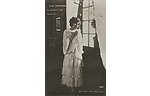
Lyda Salmonova
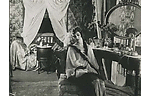
Lyda Salmonova
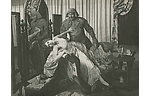
Lyda Salmonova, Paul Wegener
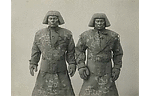
Golem-figures by sculptor Rudolf Belling
Paul Wegener
Still with Paul Wegener (in the middle)
Still with Henrik Galeen (first on the left), Paul Wegener (first from the right)
Das Königliche Bild-und Filmamt und die Industrie, Der Kinematograph, 571, (1917). S. 22ff. Artikel über Verhandlungen des Bild-und Filmamtes mit Vertretern der Filmindustrie. Bufa zeige sich am Woh...
Walter Thielemann, Der Film 1917, Der Kinematograph, 573, (1917), S. 12ff. Jahresrückblick. Positiv hervorgehoben wird die immer breitere Anerkennung, die dem Kino zuteil werde, da der immer mehr sei...
Scala-Film-Verleih GmbH, Der Hetman der Ukraine, Der Kinematograph, 581, (1918), S. 18-19. Die Anzeige geht auf den Sieg gegen Russland ein und erwähnt das Interesse des Publikums an der Geschichte d...
Argus, Neuheiten auf dem Berliner Filmmarkte, Der Kinematograph, 581, (1918), S. 28-29. "Edelsteine" wird als erstes besprochen und als psychologisch tiefgründiges Werk bezeichnet. An dritter Stelle ...
Argus, Der rasende Roland von Euskirchen, Der Kinematograph, 582, (1918), S. 6. Entgegnung auf Vorwürfe des Euskirchener Volksblattes, das Kino sei sittenverderbend. Der Schriftleiter Werner Rats kö...
Argus, Neuheiten auf dem Berliner Filmmarkte, Der Kinematograph, 586, (1918), S. 28ff. Besprochen werden gleich zwei Propagandafilme zur achten Kriegsanleihe. "Lloyd George in Berlin" wird als äußer...
Julius Sternheim, Propaganda-und Aufklärungsfilme, Der Kinematograph, 592, (1918), S. 12-14. Propagandafilme müssten maßgeblich eine Botschaft verfolgen, was sie oftmals zwangsläufig langatmig mac...
Ludwig Brauner, Die kommende Geschmackswandlung, Der Kinematograph, 593, (1918), S. 15-16. Erörterung des Publikumsgeschmacks. Gegenwärtig sei vor allem Ablenkung vom Kriegsalltag gefragt, jedoch li...