Large scale police raids on smugglers on the Budapest-Vienna railway line, on ships sailing the Danube, and along the nation’s border. "The film, made using official equipment, shows the exciting pu...
Documentary about Albert I, King of Belgium.
(Reel 1) Men board troopships, including SS Leviathan, in New York harbour. On the crossing there are sports, a dance, and jive by black troops. A submarine attack is repelled by destroyers. The men d...
(Reel 1) King George V and General Sir Herbert Plumer, commanding Second Army to which the two divisions were attached, are greeted by 30th (Old Hickory) Division commander, Major-General Edward M Lew...
The film is partially completed, and shows some signs of proper editing, but scenes may break off abruptly in one reel and resume in another reel. Throughout the film numerous reporters, press photogr...
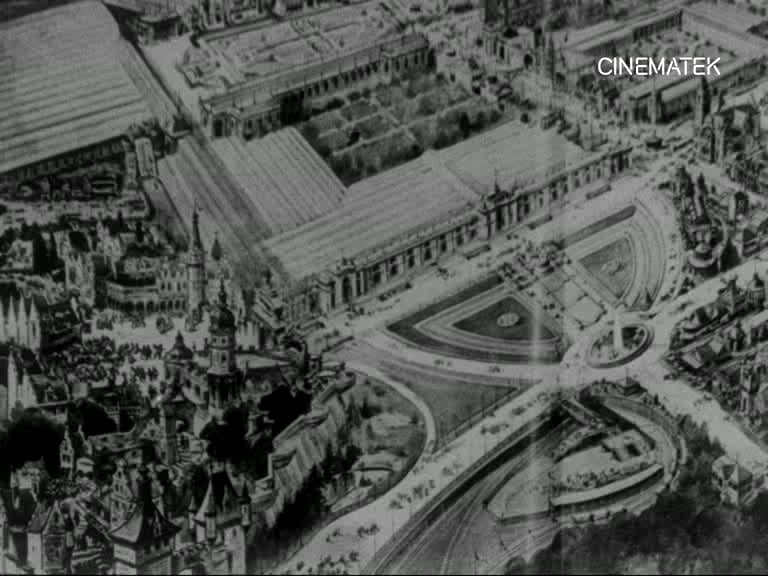
The footage, filmed on May 30, 1915, records a WWI intercession procession before the Inner City Parish Church, the Basilica, and the Parliament. The creators of the film concentrated on the famous pe...
The daughter of the farmer András Balogh, Juli, is confused by the sight of a circus, she leaves her native village secretly and enters into an engagement with the dance master at a night club in the...
(Reel 1) The film opens with unrelated scenes of the Western Front, mainly the Marne and Château-Thierry areas. Then Theodore Roosevelt beside the grave of his son Quentin. Behind-the-lines scenes of...
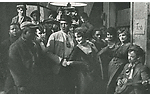
Still with Colette Corder (front, in the middle)
Ossi Oswalda, Julius Dewald
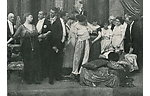
Still from "Die rätselhafte Sphinx"
Still from "Der Schwur der Renate Rabenau"
Still from "Störe nicht die Flitterwochen"
Still with Carl de Vogt (on the left, sitting)
Still with Carl Clewing (front, on the left)
Still from "Die Topharmumie"
O. Verf.. „Krieg und Kino.“ Der Kinematograph 397 (1914): 3-4. Bericht, wie bislang der Film in Kriegen eingesetzt worden sei. Ratschläge an Kinobesitzer, wie sie sich zu verhalten hätten. Mutma...
O. Verf.. „Mars regiert die Stunde.“ Der Kinematograph 397 (1914): 5-8. Aufruf an die Kinoindustrie, sich angesichts des Krieges in die Dienste des Vaterlandes zu stellen. Vorschlag, möglichst ak...
Mit der Kamera in der Schlachtfront.“ Der Kinematograph 397 (1914): 7. Werbeanzeige, die die Bedeutung der Filmaufnahmen gerade angesichts des drohenden Krieges hervorhebt.
Aubinger, Josef: „Die Kinematographie in Kriegszeiten.“ Der Kinematograph 398 (1914): 3-5. Artikel, der die mögliche Zukunft des Kinowesens im Krieg beschreibt. Die wirtschaftliche Lage der Kinos...
O. Verf.. „Schliesst die Kinos nicht.“ Der Kinematograph 399 (1914): 3-4. Aufruf an die Kinoindustrie, die Kinos nicht zu schließen, da das Volk in Kriegszeiten Ablenkung brauche. Die Eintrittspr...
Monopolfilm-Vertriebs-GmbH..“Patriotisches Kriegs-Programm.“ Der Kinematograph 399 (1914): 5. Werbung für das aktuelle Filmprogramm der Monopolfilm GmbH.
Asta-Nielsen-Lichtspiele GmbH. „Bismarck. Die neuesten Aufnahmen aus den Kriegstagen.“ Der Kinematograph 400 (1914): 1. Werbung, mit dem Hinweis, dass der Stoff des Filmes den ernsten Kriegstagen ...
O. Verf.. „Der Mangel an Aktualitäten.“ Der Kinematograph 400 (1914): 3-4. Artikel, der den Mangel an aktuellen Aufnahmen aus dem Krieg beklagt. Der Krieg sei die richtige Gelegenheit für die Pr...