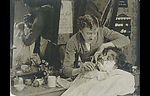
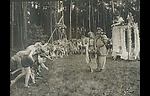
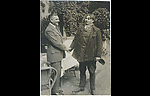
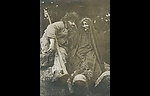
Item probably from a Topical Budget newsreel showing a march past of British troops, possibly in London.
Two items from this issue: "The Atlantic Flight - Miss Catherine Masson christens the waterplane "America" which is to attempt the great flight across the Atlantic." "Great Britain Prepares - Scenes ...
British and Belgian troops on dockside at Ostend. "Trekking To Safety - British and Belgian troops watch the departure of the refugees from Ostend" - one shot only after this title.
"The Retreat From Ghent - Belgian cavalry and artillery falling back on Bruges".
"King And President - The King of the Belgians and President Poincaré leaving Furnes after an inspection of the French Cavalry in the market square".
"The New Army Difficulties - Soldiers making their way to their billets through the flooded district".
"War In The Snow" - Severe snow storms add to the discomfort of German troops who are compelled to leave their dug-outs to prevent being frozen to death.
"In The Vosges - The ruins of La Bourgonce where the German troops suffered heavy losses".
Rochus Gliese, Paul Wegener (from left to right)
Still with Lyda Salmonova, Paul Wegener (on the right, front)
Arthur Ehrens, Paul Wegener (from left to right)
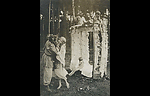
Paul Wegener, Hedwig Gutzeit
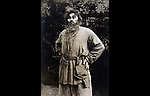
Paul Wegener
Paul Wegener, Lyda Salmonova
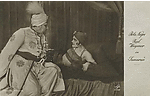
Paul Wegener, Pola Negri
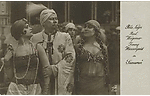
Pola Negri, Paul Wegener, Jenny Hasselquist (from left to right)
Emil Gobbers, Das Filmdrama im Zeichen der Revolution, Der Kinematograph, 652, (1919), S. 15-16. Der Film sei dazu berufen, die Ausdrucksform einer neuen Kunst für eine neue Zeit zu sein. Wenn sich d...
Egon Jacobsohn, Neuheiten auf dem Berliner Filmmarkte, Der Kinematograph, 652, (1919), S. 21. "Die Welt, der große Kuppler" wird als kitschig und misslungen bewertet, ebenso "Die Postanweisung". "Ich...
R. Genenncher, Die Amerikaner, Der Kinematograph, 658, (1919), S. 19-20. Die amerikanische Filmindustrie sei vergleichsweise konservativ und bringe noch immer ähnliche Filme hervor, wie vor zehn Jahr...
L. B., Berliner Filmneuheiten, Der Kinematograph, 667, (1919), S. 25-27. "Kaiser Wilhelms Glück und Ende" sei noch am Vortag der Uraufführung vom Innenministerium verboten worden. Der Film stelle ei...
R.Genenncher, Der Aufklärungsfilm, Der Kinematograph, 669, (1919), S. 16. Der Aufklärungsfilm habe seine Hochzeit hinter sich. Dem eigentlich hohen und lobenswerten Anliegen des Genres habe es gesch...
Das Wichtigste der Woche, Der Kinematograph, 670, (1919), S. 25-26. Seit dem 2.11.1919 gebe es in Berlin eine freiwillige Filmzensur. Die USPD habe im Reichstag den Antrag gemacht, die Kinos zu versta...
Rolf Randolf Film, Der Doppelmord in Sarajewo, Der Kinematograph, 670, (1919), S. 3?.
Die Kommunalisierung, Der Kinematograph, 672, (1919), S. 32-33. Plädoyer gegen die Pläne der Verstaatlichung aller Kinos. Die Verstaatlichung schade nur dem Staat, blähe die Bürokratie unnötig au...