Empress Zita's carriage drives past the War Ministry towards Saint Mathias' Church, the magnates of Hungary dipping their banners in salute as it passes. Outside the church, as the ceremony goes on, t...
A training exercise on gently rolling slopes begins with 77mm field guns and trench mortars opening the bombardment, joined by light howitzers. An intercut scene of Austro-Hungarian troops walking dow...
Allied troops, mainly French, patrol the streets of the town. The house of Mathias Corvinus, the fifteenth century astrologer, is shown. People queue to vote in the plebiscite. The local paper gives t...
Field Artillery fire a 75mm M16 field gun. Riflemen practise firing lying down at a range, and then retire.
Newsreel item on the US Army in training on the Pacific Coast of America, April or May ...
The troops are based at a skiing lodge in the mountains, well above the snow-line. The various groups go out on patrols, moving in single file up and down the mountain tracks at a height of 3500 metre...
A high angle view shows the royal parade, including the coach holding King George and Queen Mary, passing through the crowded streets. The procession arrives outside Saint Paul's, and the King gets ou...
The French-made gun (no identification, but possibly a 155mm naval gun) rests in its emplacement with its breech-block removed. The caption says it was destroyed in the Austrian attack which took Belg...
The procession, led by priests with lighted candles, files down the steps of the Hofburg followed by the coffin and an escort of Hungarian Life Guards on foot. The coffin is loaded into a hearse. The ...
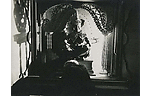
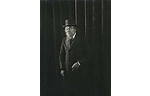
Fritz Huf
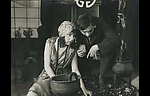
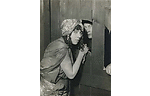
Still with Lyda Salmonova
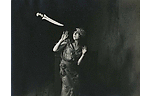
Lyda Salmonova
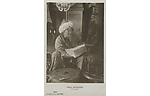
Paul Wegener
Lyda Salmonova, Paul Wegener
Paul Wegener
Paul Wegener
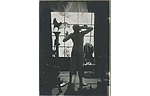
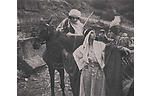
Still from "Auf den Trümmern des Paradieses"
Spectator. "Der heutige Stand der Kinoreform." Bild & Film. Zeitschrift für Lichtbilderei und Kinematographie III, 3/4 (1913/ 1914): 49-56. Der Autor warnt vor den Gefahren, die vom Kino ausgingen un...
Häfker, Hermann. "Sind die 'kleinen' Kinotheater der Reform schädlich?" Bild & Film. Zeitschrift für Lichtbilderei und Kinematographie III, 3/4 (1913/1914): 58-60. Häfker geht davon aus, dass die ...
Schumacher, Carl. "Zur 'Kinodramatik'." Bild & Film. Zeitschrift für Lichtbilderei und Kinematographie III, 3/4 (1913/1914): 63-64. Schumacher stellt die Abwesenheit von Dialogen als das Hauptproblem...
O. Verf.. "Kino-Kritik." Bild & Film. Zeitschrift für Lichtbilderei und Kinematographie III, 3/4 (1913/1914): 68-69. Obwohl immer wieder Forderungen nach der Hebung des Niveaus im Kino laut würden, ...
O. Verf.. "Das Kinoplakat." Bild & Film. Zeitschrift für Lichtbilderei und Kinematographie III, 3/4 (1913/1914): 70. Meldung über die zunehmende Hebung des Niveaus von Kinoplakaten. Statt auf grelle...
O. Verf.. "Die Kinematographie auf dem 85. Naturforschertag in Wien." Bild & Film. Zeitschrift für Lichtbilderei und Kinematographie III, 3/4 (1913/1914): 70-71. Meldung über den Einsatz von Filmen ...
O. Verf.. „Polizeiverordnung für das Rheinland.“ Bild & Film. Zeitschrift für Lichtbilderei und Kinematographie III, 3/4 (1913/1914): 72-73. Meldung über den Einsatz von Filmen als illustrieren...
O. Verf.. „Ein Kinematographengesetz in Württemberg.“ Bild & Film. Zeitschrift für Lichtbilderei und Kinematographie, III, 3/4 (1913/1914): 73. Jeder Film, der öffentlich vorgeführt werde, mü...