A captain demonstrates how the rifle grenade, which requires no cup, fits into the rifle. His men, using a trench periscope, fire the grenades from a trench. All are in shirtsleeves.
Newsreel ite...
Moroccan lancers and foot soldiers parade in the courtyard of a mud-walled fort, then march out into the desert for the coast.The young soldiers, and French Boy Scouts, march in salute past the statue...
A group of ostriches assembles with their trainers at a racetrack. One of the birds is fitted with a trotting harness, and then races "one mile in 2 minutes 10 seconds". It is taken out of the harness...
The men sit at a table in the open air, using a loading machine attached to the table to fill the cloth belts.A heavy gun fires, completely concealed by a tent with only its barrel showing, but possib...
In Trafalgar Square a big placard has been placed across the plinth of Nelson's Column, reading "England Expects This Day That Every Man Will Do His Duty". People crowd the square. Around the plinth a...
Troops train with the gas-hood, which fits rucked up around the cap like a cap-band. The men crouch behind a barricade of logs. Smoke, representing gas, drifts over them and they pull down the hoods. ...
Sarrail, with an escort of lancers in parade dress, rides past a guard of French soldiers and through an improvised arch ("arc de triomphe"), half-silhouetted against the sea. Sarrail arrives at Lembe...
The film describes the prisoners as the "result of the great French victory in Champagne". They are led into a large cultivated area, standing in 'blocks' of a few hundred men. Dragoons, apparently in...
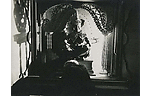
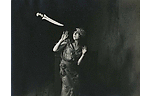
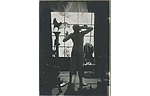
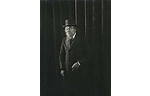
Fritz Huf
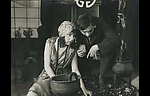
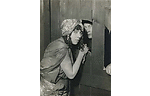
Still with Lyda Salmonova
Lyda Salmonova
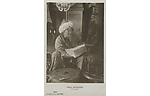
Paul Wegener
Lyda Salmonova, Paul Wegener
Paul Wegener
Paul Wegener
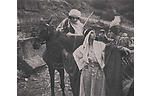
Still from "Auf den Trümmern des Paradieses"
Spectator. "Der heutige Stand der Kinoreform." Bild & Film. Zeitschrift für Lichtbilderei und Kinematographie III, 3/4 (1913/ 1914): 49-56. Der Autor warnt vor den Gefahren, die vom Kino ausgingen un...
Häfker, Hermann. "Sind die 'kleinen' Kinotheater der Reform schädlich?" Bild & Film. Zeitschrift für Lichtbilderei und Kinematographie III, 3/4 (1913/1914): 58-60. Häfker geht davon aus, dass die ...
Schumacher, Carl. "Zur 'Kinodramatik'." Bild & Film. Zeitschrift für Lichtbilderei und Kinematographie III, 3/4 (1913/1914): 63-64. Schumacher stellt die Abwesenheit von Dialogen als das Hauptproblem...
O. Verf.. "Kino-Kritik." Bild & Film. Zeitschrift für Lichtbilderei und Kinematographie III, 3/4 (1913/1914): 68-69. Obwohl immer wieder Forderungen nach der Hebung des Niveaus im Kino laut würden, ...
O. Verf.. "Das Kinoplakat." Bild & Film. Zeitschrift für Lichtbilderei und Kinematographie III, 3/4 (1913/1914): 70. Meldung über die zunehmende Hebung des Niveaus von Kinoplakaten. Statt auf grelle...
O. Verf.. "Die Kinematographie auf dem 85. Naturforschertag in Wien." Bild & Film. Zeitschrift für Lichtbilderei und Kinematographie III, 3/4 (1913/1914): 70-71. Meldung über den Einsatz von Filmen ...
O. Verf.. „Polizeiverordnung für das Rheinland.“ Bild & Film. Zeitschrift für Lichtbilderei und Kinematographie III, 3/4 (1913/1914): 72-73. Meldung über den Einsatz von Filmen als illustrieren...
O. Verf.. „Ein Kinematographengesetz in Württemberg.“ Bild & Film. Zeitschrift für Lichtbilderei und Kinematographie, III, 3/4 (1913/1914): 73. Jeder Film, der öffentlich vorgeführt werde, mü...